
We have been made to believe that “herbal” is a synonym for “harmless.” We see a leafy logo on a bottle and assume it’s safer than a prescription. But the truth is more complex. While plant-based medicine has been a cornerstone of humanity for millennia, the modern supplement industry has given rise to several dangerous herbal practices that could be quietly sabotaging your health.
If you want the benefits of nature without the hospital bill, you need to know how to spot these red flags.
Key insight most herbal harm doesn’t come from the plant itself — it comes from how people use it.
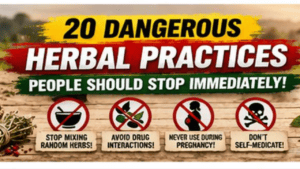
This guide highlights 20 dangerous herbal practices people should stop immediately, to promote safer use of traditional medicine and prevent toxicity, organ damage, or dangerous drug interactions.
Are You at High Risk? (Take this quick check)
If you answer YES to any of these, read this article with extra attention:
- Do you take prescription medications?
- Do you have liver or kidney issues?
- Are you pregnant, breastfeeding, or do you have a child under 12?
- Are you over 65?
If you fall into any of these groups, herbal use should be approached with extra caution and professional guidance.
1. The “Shotgun” Formula
Have you ever seen a “Total Body Detox” with a list of 50 different herbs? This is one of the most common dangerous herbal practices in the industry today.
When you ingest dozens of bioactive compounds at once, you aren’t just getting a “boost”—you’re creating an unpredictable chemical reaction in your gut. Many of these herbs compete for the same metabolic pathways, meaning they can either cancel each other out or, worse, become toxic when combined.
- The Rule: Stick to “simples” (single herbs) or small, targeted blends. If the ingredient list looks like a dictionary, put it back.
2. The Lack of Third-Party Verification
Because the FDA treats supplements more like food than drugs, manufacturers often cut corners. One of the most dangerous herbal practices is selling products that haven’t been tested for purity.
Independent lab studies have frequently found “all-natural” supplements to be contaminated with:
- Heavy Metals: Lead, mercury, and arsenic from poor soil.
- Hidden Pharmaceuticals: Banned weight-loss drugs or steroids added to make the herb “work” faster.
- Fillers: Common allergens like soy or wheat that aren’t listed on the label.
The Fix: Always look for a USP, NSF, or Informed-Choice seal on the bottle.
3. The “Interaction Trap” (Mixing Herbs with Meds)
Perhaps the most life-threatening of all dangerous herbal practices is the failure to account for drug-herb interactions. A perfectly safe herb can become a poison when mixed with the wrong prescription.
- St. John’s Wort: Can render birth control pills and heart medications completely useless.
- Gingko Biloba: Significantly thins the blood, leading to a risk of internal bleeding if you take aspirin or have surgery.
- Licorice Root: Can cause dangerous drops in potassium levels and spikes in blood pressure.
4. Treating Herbs Like They Aren’t “Real” Medicine
Many people engage in dangerous herbal practices by ignoring dosage instructions. There is a “High Dose Delusion” that if one capsule is good, five must be better.
In reality, plants contain powerful alkaloids. Herbs like Comfrey or Kava, while useful in specific contexts, can lead to permanent liver failure if taken in high doses or for too long. Respect the dose as much as you would a prescription from a doctor.
How to Stay Safe: The 3-Step Audit
To avoid falling victim to dangerous herbal practices, run every supplement through this quick checklist:
- Is it Standardized? Look for “Standardized Extract” to ensure you’re getting a consistent amount of the active ingredient.
- Does my Pharmacist know? Pharmacists are often better trained in plant-drug interactions than GPs. Ask them before you mix.
- Is there a “Why”? Never take an herb just because a TikTok influencer told you to. Research the specific mechanism of how it works in the body.
Part 1: Dangerous Dosage & Preparation Practices
1. Assuming More Herbs Means More Healing (The “More is Better” Trap)
Why it’s dangerous: This is one of the most common dangerous herbal practices leading to toxicity & organ damage.
The reality: Herbs have a “therapeutic window.” Taking extra aloe vera juice doesn’t double the healing—it causes severe diarrhea and electrolyte imbalance. It can
Action step: Start with the smallest recommended dose, not the largest.
2. Boiling Delicate Herbs for Too Long
Why it’s dangerous: Among dangerous herbal practices, this one quietly destroys helpful compounds while creating toxins.
The reality: Boiling kills vitamin C, flavonoids, and essential oils. It also concentrates bitter alkaloids, making the brew harsh on your stomach.
Action step: Learn the correct simmer time for each herb.
3. Mixing Too Many Herbs Together (The “Kitchen Sink” Mistake)
Why it’s dangerous: Random mixing is one of the most overlooked dangerous herbal practices because it creates unknown interactions.
The reality: Combining ginseng (stimulant) with valerian (sedative) confuses your nervous system. This leads to synergistic toxicity or reduced effectiveness.
Action step: Stick to 1-3 herbs at a time from a single trusted formula.
4. Using “One Recipe Fits All” Remedies
Why it’s dangerous: This ranks high among dangerous herbal practices because it ignores individual biology.
The reality: A remedy that cures arthritis in one person may spike blood pressure in another. Your age, weight, and health status all matter.
Action step: Personalize your approach. Don’t share herbal teas.
Related Articles
5. Guessing Dosages Without Measurement (“Just a handful…”)
Why it’s dangerous: Vague measuring fuels many dangerous herbal practices leading to overdose.
The reality: “A handful” of bitter kola for one person is insomnia and tremors for another.
Action step: Buy a cheap milligram scale. Use real measurements.
Part 2: Dangerous Beliefs About Herbal Safety
6. Believing “Natural Means Safe”
Risk: False Security
Many toxic substances are natural. think of arsenic or belladonna. Herbs like comfrey can damage the liver, while ephedra can raise blood pressure dangerously. Some herbs can:
- Damage the liver
- Affect the heart
- Interfere with medications
7. Ignoring Side Effects
Risk: Delayed Harm
Symptoms like nausea, dizziness, voming or fatigue are often dismissed as “normal cleansing.” but may signal toxicity or allergic reactions.
8. Using Herbs During Pregnancy Without Guidance
Risk: Miscarriage or Complications
Herbs like pennyroyal and blue cohosh can stimulate uterine contractions or affect fetal development. Even mild herbs like ginger should be used cautiously.
9. Giving Adult Herbal Doses to Children
Risk: Overdose
Children process substances differently. Even mild herbs can become harmful at adult doses. A teaspoon of clove oil can be fatal to a toddler. Pediatric dosing requires professional oversight.
10. Long-Term Use Without Breaks
Risk: Organ Strain
Continuous use of some herbs can:
- Accumulate in the body
- Stress detox organs
Continuous use of herbs like senna (a laxative) can weaken bowel function. Long-term buildup of compounds may stress detox organs.
Part 3: Dangerous Herbal–Drug Interactions (The Silent Danger)
11. Combining Herbs with Prescription Drugs
Why it’s dangerous: This is one of the deadliest dangerous herbal practices because interactions are invisible until harm occurs.
The reality:
- St. John’s Wort destroys birth control and antidepressants.
- Ginkgo biloba + blood thinners = bleeding risk.
Action step: Show your doctor every herb you take.
12. Using Herbs for Chronic Diseases Without Monitoring
Why it’s dangerous: Unmonitored self-treatment is a reckless dangerous herbal practice for diabetes or hypertension.
The reality: Herbs may help mild cases, but uncontrolled disease progresses silently.
Action step: Track your blood sugar or blood pressure weekly.
13. Stopping Prescribed Medication Suddenly
Why it’s dangerous: This is perhaps the most life-threatening dangerous herbal practice of all.
The reality: Replacing insulin with herbal teas or stopping antihypertensives abruptly can kill you.
Action step: Never stop a prescription without a doctor’s supervision.
Part 4: Sourcing & Preparation (Where You Get It Matters)
14. Buying Herbs from Unverified Sources
Why it’s dangerous: Roadside vendors enable dangerous herbal practices through contaminated products.
The reality: Cheap powder may contain lead, arsenic, or toxic adulterants.
Action step: Buy from reputable suppliers with third-party testing.
15. Using the Wrong Plant Species
Why it’s dangerous: Mistaken identity fuels fatal dangerous herbal practices.
The reality: Wild yam vs. cassava. Mint vs. toxic pennyroyal. One kills.
Action step: Learn to identify plants 100% correctly or buy from experts.
16. Improper Storage
Why it’s dangerous: Damp storage creates hidden dangerous herbal practices through mold toxins.
The reality: Aflatoxins from mold are powerful liver toxins.
Action step: Store in airtight glass jars in a cool, dark, dry place.
17. Using Spoiled or Old Preparations
Why it’s dangerous: Ignoring expiry dates is an avoidable, dangerous herbal practice.
The reality: Old syrups can ferment, producing harmful bacteria.
Action step: Smell and check anything older than 6 months. When in doubt, throw it out.
Part 5: Risky Self-Medication Habits (The Social Media Trap)
18. Diagnosing Yourself Without Proper Knowledge
Why it’s dangerous: Self-diagnosis enables dangerous herbal practices that delay real treatment.
The reality: Treating “malaria” with herbs when it’s a bacterial infection lets the infection worsen.
Action step: Get a real diagnosis first—then consider herbs.
19. Relying Solely on Social Media Advice
Why it’s dangerous: Herbal “influencers” often promote herbal remedies without any evidence or scientific research.
The reality: Viral trends like excessive ginger can cause stomach ulcers.
Action step: Verify advice with peer-reviewed sources or a trained herbalist.
20. Ignoring Professional Guidance
Why it’s dangerous: This final dangerous herbal practice ties all the others together: refusing expert help.
The reality: Herbal medicine is powerful—and that’s exactly why it needs knowledge and respect.
Action step: Find a trained practitioner who understands both tradition and modern science.
Safer Herbal Use: Practical Tips
- Start with low doses
- Use fewer herbs at a time
- Research credible sources
- Consult professionals when needed
- Monitor your body’s response
Your Turn: Stop These Dangerous Herbal Practices
Herbs are not the problem. Dangerous herbal practices are.
Which of these 20 dangerous herbal practices surprised you the most?
Drop a comment below. Sharing your experience could help someone else avoid serious harm.
Safer Herbal Use: Practical Recap
- Start with low doses
- Use fewer herbs at a time
- Research credible sources
- Consult professionals
- Monitor your body’s response
Remember: Avoid dangerous herbal practices by treating herbs with the same respect you give prescription drugs. Used correctly, they support health. Used carelessly, they cause serious harm.
Disclaimer
This content is for educational purposes only and does not replace medical advice. Always consult a qualified healthcare professional before starting any herbal treatment, especially if you have an existing medical condition or take prescription medications.