
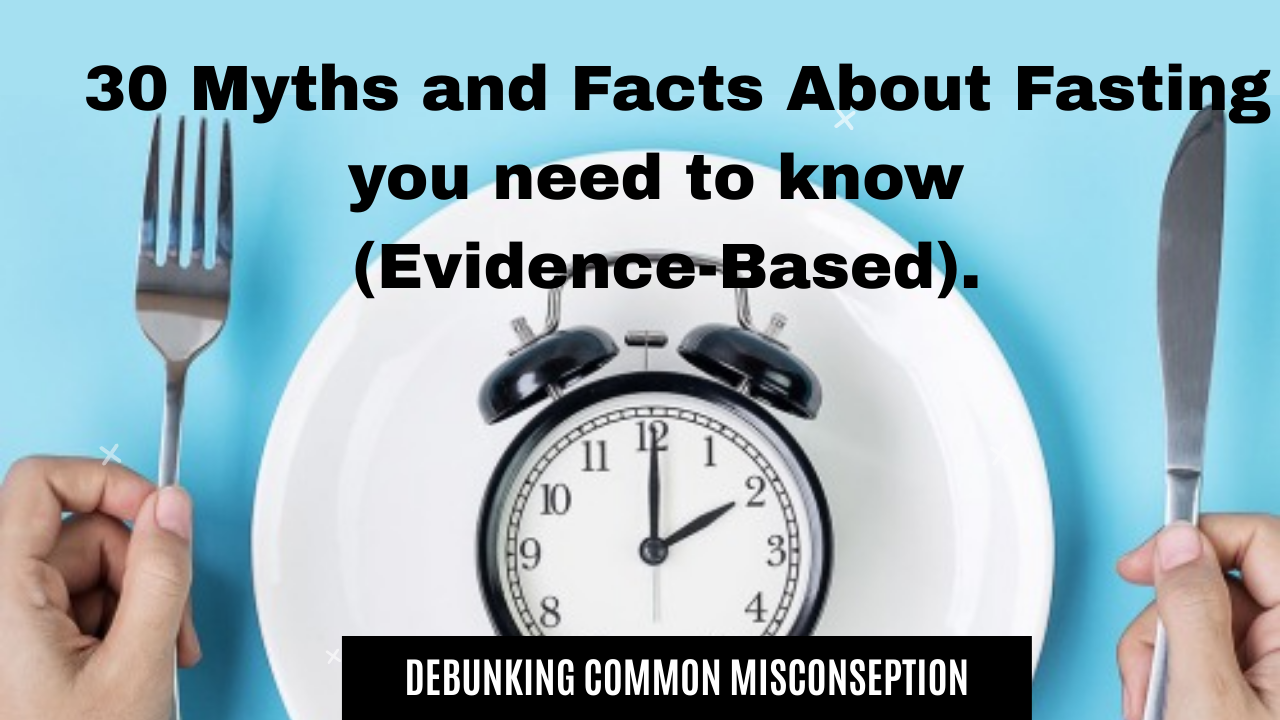

Fasting has become one of the most talked-about health practices in recent years. While science supports many of its benefits, myths and misconceptions continue to circulate. In this post, we’ll debunk 30 common fasting myths and replace them with evidence-based facts.
Fasting is one of the oldest health practices, but modern science has brought it back into the spotlight. Unfortunately, myths and misconceptions often overshadow the real benefits.
What Happens in the Body During Fasting?
When you stop eating, your body shifts through predictable metabolic stages:
- 0–12 hours: Glucose from recent meals is used for energy.
- 12–24 hours: Glycogen stores in the liver decline.
- 24+ hours: The body increases fat oxidation and ketone production.
- Extended fasting: Hormonal changes promote fat mobilization and cellular repair pathways.
Key hormonal shifts include:
- Reduced Insulin
- ↑Increase in Glucagon
- Increase in Growth hormone
- ↑Increase in Norepinephrine
These shifts promote fat burning, metabolic flexibility, and cellular adaptation.
Types of Fasting
- Intermittent Fasting (IF): Cycles between eating and fasting, like 16:8 (16 hours fast, 8 hours eat) or 5:2 Diet: Eat normally for 5 days, restrict calories (about 500–600) on 2 non-consecutive days.
- Water Fasting: Only water for a set period (days or weeks).
- Dry Fasting: No food or water (usually short-term).
- Alternate Day Fasting: Alternate between eating and fasting days.
- Extended Fasting: Fasting for 24+ hours (often done medically supervised).Complete fast from dinner to dinner or breakfast to breakfast, once or twice a week.
- Religious Fasting: Like Ramadan (dawn-to-sunset fast in Islam) or Christian/Ethiopian Orthodox fasts.
- Circadian Fasting: Align eating with daylight hours, typically fasting after sunset.
- 12-Hour Fast: A gentler approach, fasting for 12 hours daily (often overnight).
Let’s break down 30 common fasting myths with detailed explanations and evidence-based facts.
30 Myths vs. Facts about fasting: The Truth
1. Myth: Fasting is the same as starvation
Many people confuse fasting with starvation, assuming both mean depriving the body of food until harm occurs.
Fact: Fasting is a controlled, intentional practice. Starvation is involuntary and prolonged deprivation. In fasting, the body adapts by switching to fat stores for energy, while in starvation, the body eventually breaks down muscle and organs.
2. Myth: You lose muscle mass quickly when fasting
Critics argue that fasting forces the body to burn muscle for energy
Fact: Research shows fasting preserves lean muscle better than daily calorie restriction. The body prioritizes fat breakdown first, and growth hormone levels rise during fasting, protecting muscle tissue. Muscle loss risk increases with:
- Prolonged fasting
- Low protein intake
- No resistance training
3. Myth: Fasting slows down your metabolism
Some believe fasting makes the body “go into starvation mode,” reducing calorie burn.
Fact: Short-term fasting (12–48 hours) does not “shut down” metabolism. Studies show norepinephrine levels can increase during early fasting, which may slightly elevate the metabolic rate temporarily. Metabolic slowdown is more associated with long-term severe caloric restriction, not structured intermittent fasting.
Studies indicate fasting maintains or even improves metabolic flexibility.
4. Myth: Fasting is unsafe for everyone
A common misconception is that fasting is universally harmful.
Fact: Healthy adults can fast safely. Healthy adults can fast safely. However, people with diabetes, eating disorders, or pregnant women should consult a doctor before fasting. Safety depends on context, not a blanket rule.
5. Myth: Fasting causes nutrient deficiencies
Some people worry that skipping meals means missing essential vitamins and minerals.
Fact: Short-term fasting does not deplete nutrients significantly if refeeding is balanced. Balanced refeeding ensures adequate intake. Deficiencies occur only if fasting is paired with poor diet choices during eating windows.
6. Myth: Fasting is only for weight loss
Many assume fasting is just another diet trend.
Fact: Beyond weight loss, fasting promotes autophagy (cellular repair), reduces inflammation, improves insulin sensitivity, and may support longevity.
7. Myth: Fasting makes you weak
People often fear they’ll feel drained without food.
Fact: Many report increased energy and mental clarity. Ketones, produced during fasting, are a clean energy source for the brain and muscles.
8. Myth: Breakfast is the “most important meal”
This phrase has been repeated for decades, often promoted by cereal companies.
Fact: Evidence shows that skipping breakfast (time-restricted eating) can improve metabolic health. What matters is overall nutrient intake, not rigid meal timing.
9. Myth: Fasting damages the brain
Fact: Fasting increases BDNF (Brain-Derived Neurotrophic Factor), which supports learning and memory. Ketones provide stable energy, protecting against neurodegenerative diseases.
10. Myth: Fasting harms the heart
Fact: Clinical studies show fasting improves blood pressure, cholesterol, and triglycerides, lowering cardiovascular risk.
11. Myth: Fasting is just a fad
Fact: Fasting has been practiced for centuries in religious and cultural traditions. Modern science validates its health benefits, making it more than a passing fad.
12. Myth: Fasting causes uncontrollable overeating
Fact: Appetite hormones like ghrelin adjust during fasting. Many report reduced cravings and better portion control after fasting period. Appetite hormones adjust, often reducing overall intake.
13. Myth: Fasting is dangerous for women
Fact: Women can benefit, though hormonal cycles may require tailored approaches. Research shows improvements in insulin sensitivity and weight management.
14. Myth: Fasting leads to dehydration
Fact: Proper hydration during fasting prevents dehydration. Water, tea, and black coffee are allowed in most fasting protocols.
15. Myth: Fasting is the same as dieting
Fact: Dieting focuses on reducing calories daily. Fasting focuses on timing, allowing metabolic reset and hormonal balance.
16. Myth: Fasting doesn’t affect longevity
Fact: Animal studies show lifespan extension; Human data suggests fasting reduces oxidative damage and supports anti-aging processes.
17. Myth: Fasting weakens the immune system
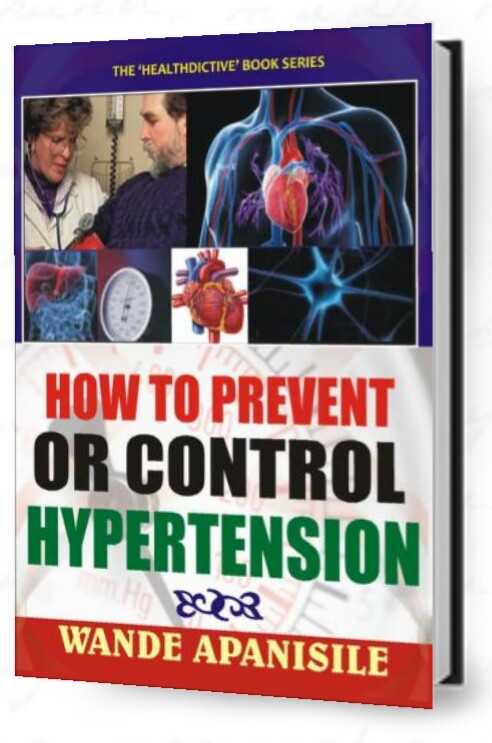
Learn how to manage high blood pressure successfully at home by practicing the life-changing information in this ebook.
You will find this book extremely useful if you want to save time, money with plenty of peace of mind.
In this e-book, you will learn what your doctor failed to tell you.
Fact: Short-term fasting promotes immune cell regeneration, recycling old cells and producing new ones.
18. Myth: Fasting is ineffective for obesity
Fact: Evidence shows fasting reduces weight, waist circumference, and improves metabolic markers in obese adults.
19. Myth: Fasting requires supplements
Fact: Supplements aren’t required; nutrient intake during eating windows suffices if the diet is balanced.
20. Myth: Fasting is universally beneficial
Fact: Fasting is not suitable for children, pregnant women, or those with certain medical conditions. It’s powerful, but not for everyone.
21. You Must Eat Every 2–3 Hours to Stay Healthy
Fact: There is no strong scientific requirement to eat that frequently. Human metabolism evolved with periods of food scarcity. Meal frequency should match metabolic needs — not marketing advice.
22. Fasting Causes Dangerous Hypoglycemia in Everyone
Fact: Healthy individuals typically maintain stable glucose through glycogen breakdown and gluconeogenesis.
However, patients on insulin or sulfonylureas must consult medical professionals. The American Diabetes Association emphasizes individualized supervision for dietary interventions in diabetics.
23. Fasting Detoxifies Your Body
Fact:
The liver and kidneys already detoxify your body. Fasting does not “flush toxins” in a magical way.
However, fasting may support metabolic repair pathways, including autophagy.
24. Autophagy Is a Myth
Fact:
Autophagy is a well-established cellular recycling process. Research institutions such as Harvard Medical School describe its role in removing damaged cellular components.
The debate is not whether autophagy exists — but how much fasting is required to meaningfully increase it in humans.
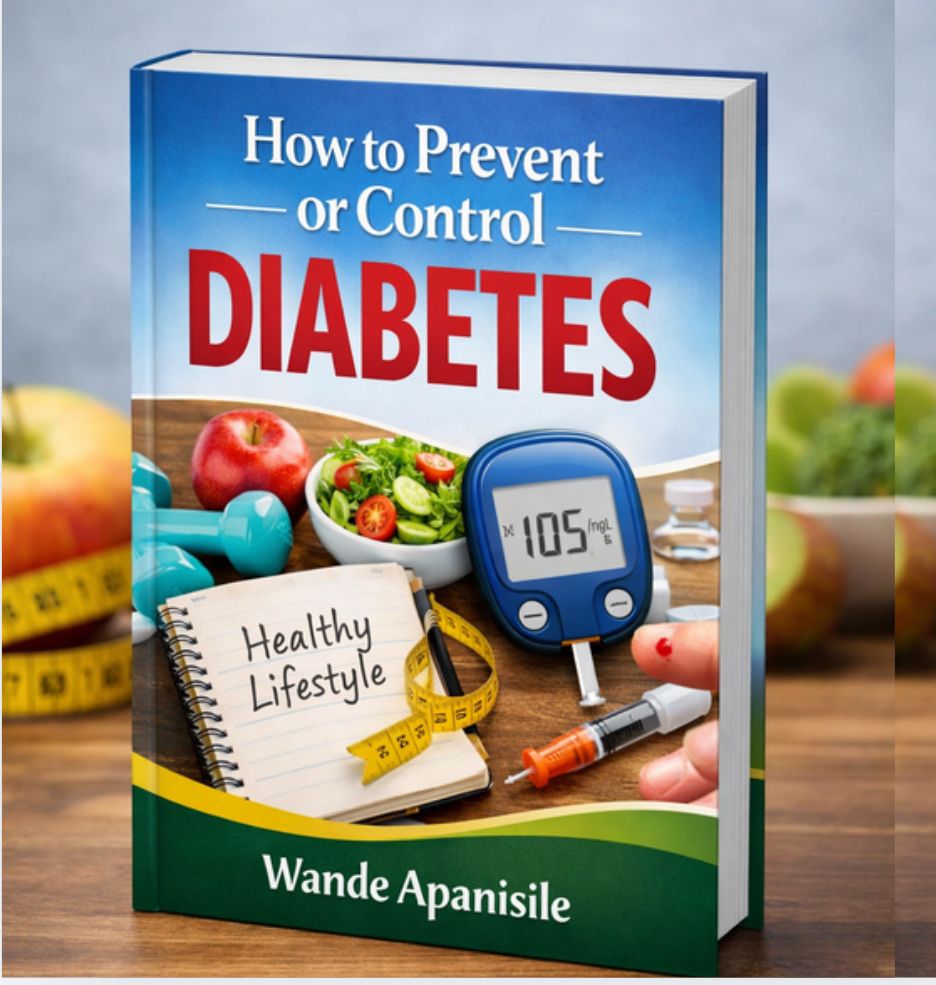
Struggling with high blood sugar, fatigue, or fear of complications?
You’re not alone — and more importantly, you’re not powerless.
This book gives you a clear, practical roadmap to prevent and manage diabetes naturally — without confusion, extreme diets, or relying solely on medication.
Inside, you’ll discover:
✔️ How to naturally stabilize your blood sugar levels
✔️ Simple daily habits that reduce insulin resistance
✔️ Powerful herbs and foods that support glucose control
✔️ Easy meal strategies that don’t feel restrictive
✔️ Warning signs most people ignore (until it’s too late)
✔️ How to prevent complications like nerve damage and fatigue
Whether you’re prediabetic, newly diagnosed, or managing diabetes long-term, this guide will help you take back control of your health — one step at a time.
25. You Can Eat Anything During Your Eating Window
Fact: Fasting is not a license for ultra-processed binge eating.
Health outcomes depend heavily on:
- Macronutrient balance
- Micronutrient adequacy
- Fiber intake
- Protein sufficiency
Poor food quality cancels metabolic benefits.
26. Fasting Cures Diabetes
Fact: Fasting may improve insulin sensitivity and reduce blood sugar levels. It is not a cure. Type 2 diabetes management requires medical oversight, especially if medications are involved.
27. Dry Fasting Is Superior
Fact: There is limited clinical evidence showing dry fasting is superior to water-based fasting. Hydration supports kidney function and cardiovascular stability. During Ramadan, studies show mixed metabolic outcomes depending on food quality and sleep patterns.
28. The Longer the Fast, the Better the Results
Fact: More is not always better.
Extended fasting increases risks:
- Electrolyte imbalance
- Fatigue
- Nutrient deficiency
- Hormonal disruption
Consistency beats extremism.
29. Fasting Is a Quick Fix
Fact: Fasting is a metabolic tool — not a shortcut.
Its benefits depend on:
- Diet quality
- Sleep
- Stress management
- Physical activity
- Medical status
Without those aligned, fasting becomes just another abandoned strategy.
30. Everyone Should Fast
Fact: Fasting is contraindicated in pregnancy, underweight individuals, adolescents, advanced kidney disease, certain endocrine disorders.
Personalization is non-negotiable.
Final Takeaway
Fasting is neither a miracle nor a menace. It is a physiological stressor that can produce adaptive benefits — if applied correctly. Before starting, assess your medical status. If you have chronic conditions, consult a qualified healthcare professional. In metabolic health, discipline beats drama every time.
Conclusion
Fasting is a powerful tool for health, but myths often cloud its true benefits. By relying on peer-reviewed evidence, we can see that fasting supports metabolic health, longevity, and cellular repair—when practiced responsibly.
Disclaimer
Disclaimer
The content in our articles is not meant to substitute a personal consultation with a qualified healthcare professional and should not be considered medical advice.
References
Anton, S. D., Moehl, K., Donahoo, W. T., Marosi, K., Lee, S. A., Mainous, A. G., Leeuwenburgh, C., & Mattson, M. P. (2018). Flipping the Metabolic Switch: Understanding and Applying the Health Benefits of Fasting. Obesity (Silver Spring, Md.), 26(2), 254–268. https://doi.org/10.1002/oby.22065
de Cabo, R., & Mattson, M. P. (2019). Effects of Intermittent Fasting on Health, Aging, and Disease. New England Journal of Medicine, 381(26), 2541–2551. https://doi.org/10.1056/nejmra1905136
Longo, V. D. (2024). Intermittent and periodic fasting in the treatment of obesity and type 2 diabetes mellitus. Nature Reviews Endocrinology. https://doi.org/10.1038/s41574-024-01078-5
Moro, T., Tinsley, G., Bianco, A., Marcolin, G., Pacelli, Q. F., Battaglia, G., Palma, A., Gentil, P., Neri, M., & Paoli, A. (2016). Effects of eight weeks of time-restricted feeding (16/8) on basal metabolism, maximal strength, body composition, inflammation, and cardiovascular risk factors in resistance-trained males. Journal of Translational Medicine, 14(1). https://doi.org/10.1186/s12967-016-1044-0
Patterson, R. E., Laughlin, G. A., LaCroix, A. Z., Hartman, S. J., Natarajan, L., Senger, C. M., Martínez, M. E., Villaseñor, A., Sears, D. D., Marinac, C. R., & Gallo, L. C. (2015). Intermittent Fasting and Human Metabolic Health. Journal of the Academy of Nutrition and Dietetics, 115(8), 1203–1212. https://doi.org/10.1016/j.jand.2015.02.018
Semnani-Azad, Z., Khan, T. A., Chiavaroli, L., Chen, V., Bhatt, H. A., Chen, A., Chiang, N., Oguntala, J., Kabisch, S., Lau, D. C., Wharton, S., Sharma, A. M., Harris, L., Leiter, L. A., Hill, J. O., Hu, F. B., Lean, M. E., Kahleová, H., Rahelic, D., & Salas-Salvadó, J. (2025). Intermittent fasting strategies and their effects on body weight and other cardiometabolic risk factors: systematic review and network meta-analysis of randomised clinical trials. BMJ, 389, e082007. https://doi.org/10.1136/bmj-2024-082007
Sutton, E. F., Beyl, R., Early, K. S., Cefalu, W. T., Ravussin, E., & Peterson, C. M. (2018). Early Time-Restricted Feeding Improves Insulin Sensitivity, Blood Pressure, and Oxidative Stress Even without Weight Loss in Men with Prediabetes. Cell Metabolism, 27(6), 1212-1221.e3. https://doi.org/10.1016/j.cmet.2018.04.010
Tabibzadeh, S. (2022). Role of autophagy in aging: The good, the bad, and the ugly. Aging Cell, 22(1). https://doi.org/10.1111/acel.13753
Varady, K. A., & Hellerstein, M. K. (2007). Alternate-day fasting and chronic disease prevention: a review of human and animal trials. The American Journal of Clinical Nutrition, 86(1), 7–13. https://doi.org/10.1093/ajcn/86.1.7