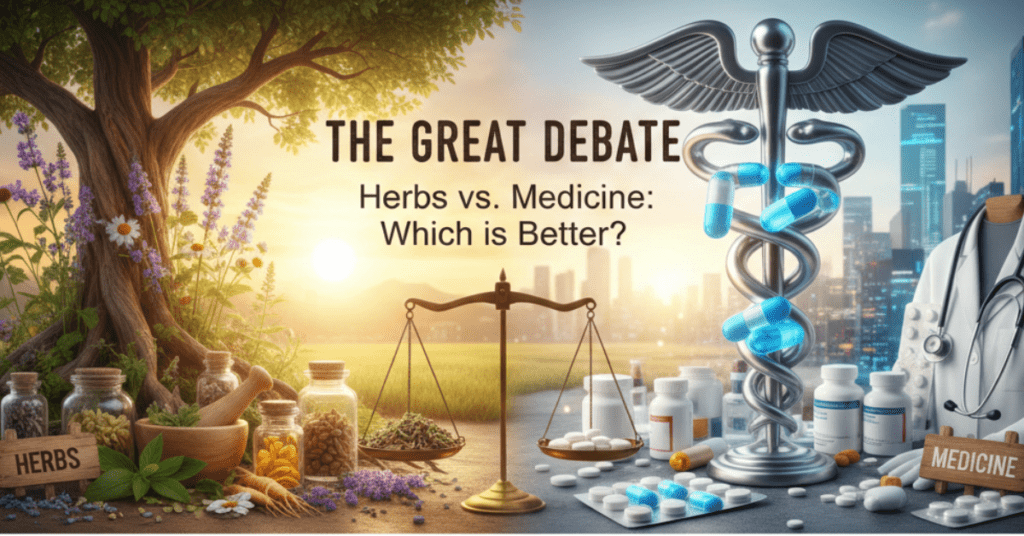

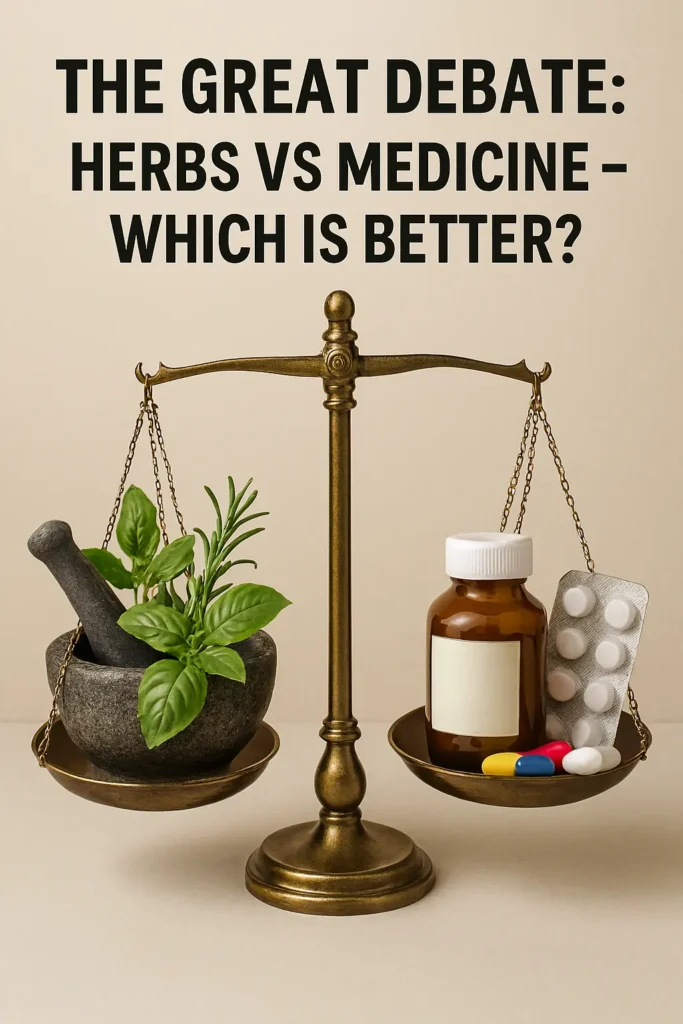
The debate around herbs vs medicine has been going on for years. Some people trust natural remedies, while others rely on modern pharmaceuticals. But which option truly delivers better results?
The answer isn’t as simple as choosing one over the other. Both herbs and conventional medicine have strengths, limitations, and ideal use cases.
For thousands of years, humans relied on plants to heal wounds, fight infections, and ease pain. Today, we walk into pharmacies and pick up pills engineered in laboratories. This shift has sparked one of healthcare’s most persistent debates: are herbs better than modern medicine, or should we trust pharmaceutical interventions?
As someone who has spent years researching both traditional and conventional medicine, I can tell you the answer isn’t as simple as choosing one over the other.
Table of Contents
Herbs vs Medicine: Which Is Better for Your Health?
Understanding What We’re Actually Comparing
Before we dive into this debate, we need to clarify what we mean by “herbs” and “medicine.” Herbal remedies include plant-based treatments—teas, tinctures, extracts, and supplements derived from roots, leaves, flowers, and bark. Modern medicine, or pharmaceuticals, refers to synthetic or semi-synthetic compounds created through rigorous scientific processes, often inspired by these same plants.
Here’s something many people don’t realize: approximately 25% of modern pharmaceuticals are derived directly from plants. Aspirin originated from willow bark, digoxin for heart conditions comes from foxglove, and the cancer drug paclitaxel comes from the Pacific yew tree. The line between “natural” and “synthetic” is blurrier than most people think.
The Case for Herbal Medicine
Herbal medicine offers several compelling advantages that explain its enduring popularity across cultures. Traditional remedies have been tested through centuries of use, giving us a different kind of evidence—observational data across millions of people over countless generations. Turmeric for inflammation, ginger for nausea, and chamomile for anxiety have track records spanning millennia.
The holistic approach of herbal medicine also resonates with many people. Rather than targeting a single symptom, herbal practitioners often address underlying imbalances in the body. This whole-person perspective can be particularly valuable for chronic conditions where conventional medicine sometimes falls short. Additionally, many herbs produce fewer side effects than their pharmaceutical counterparts, and they’re often more accessible and affordable, particularly in communities without easy access to healthcare.
Plants contain complex mixtures of compounds that work synergistically meaning the whole plant might be more effective than any isolated component. This “entourage effect” is now being studied seriously in mainstream research, particularly in cannabis medicine.
The Case for Modern Pharmaceuticals
Conventional medicine brings scientific rigor that herbal medicine often cannot match. Pharmaceutical drugs undergo extensive testing through randomized controlled trials-the gold standard for determining safety and efficacy. We know precisely how much of the active ingredient you’re getting in each pill, and we understand the exact mechanisms by which most medications work in the body.
For acute, life-threatening conditions, modern medicine is often irreplaceable. Antibiotics for bacterial infections, insulin for diabetes, chemotherapy for cancer, and emergency medications for heart attacks or strokes-these interventions have saved countless millions of lives
Modern medicine also offers standardization and quality control. When you take a prescription medication, you know exactly what you’re getting. The same cannot always be said for herbal supplements, which can vary dramatically in potency and purity depending on growing conditions, harvesting methods, and manufacturing processes.
Where the Debate Gets Complicated
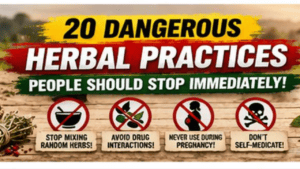
The reality is that both approaches have significant limitations. Herbal medicine suffers from a lack of regulation in many countries. The supplement industry in the United States, for example, isn’t required to prove efficacy before marketing products. Studies have found that some herbal products don’t contain the ingredients listed on their labels, while others are contaminated with heavy metals, pesticides, or even pharmaceutical drugs.
Herbs can also interact dangerously with prescription medications. St. John’s wort, for instance, can reduce the effectiveness of birth control pills, antidepressants, and blood thinners. “Natural” doesn’t automatically mean safe—some of the most toxic substances on Earth are entirely natural.
Conventional medicine has its own problems. The pharmaceutical industry has been plagued by conflicts of interest, with some companies downplaying risks or exaggerating benefits to maximize profits. Many drugs treat symptoms rather than addressing root causes. Overprescription of antibiotics has led to antibiotic resistance, while the opioid crisis has revealed how dangerous even approved medications can become. Prescription drugs are also expensive, putting essential treatments out of reach for many people.
What the Research Actually Shows
When we look at head-to-head comparisons, the results are nuanced. For mild to moderate depression, St. John’s wort has shown efficacy comparable to some antidepressants in clinical trials, though it’s not appropriate for severe depression and comes with interaction risks. For pain management, some studies suggest cannabis and certain herbs can complement or reduce reliance on opioids, though more research is needed. Ginger has demonstrated effectiveness against nausea that rivals some prescription medications, with fewer side effects.
However, for serious conditions like bacterial pneumonia, cancer, or autoimmune diseases, pharmaceuticals consistently outperform herbal alternatives in rigorous studies. The speed and potency required to manage these conditions generally necessitate pharmaceutical intervention.
The Integrative Approach: A Better Question
Perhaps we’re asking the wrong question. Instead of “which is better,” we should ask “when is each approach most appropriate?” This is the philosophy behind integrative medicine, which combines the best of both worlds based on evidence.
For chronic conditions like arthritis, high cholesterol, or mild anxiety, herbs might serve as a first-line approach or complement to pharmaceuticals, potentially allowing for lower drug doses. For acute bacterial infections, trauma, or severe illness, pharmaceuticals are typically essential.
For preventive health and general wellness, herbs, nutrition, and lifestyle modifications often make more sense than medication.
Many forward-thinking physicians now practice this integrative approach. They might recommend turmeric and fish oil alongside prescription medications for inflammatory conditions, or suggest meditation and valerian root before prescribing sleep medications. The key is using each tool where it’s most effective and safest.
Making Informed Choices for Your Health
If you’re considering herbal medicine, work with qualified practitioners—licensed naturopathic doctors, herbalists with proper training, or integrative medicine physicians who understand both systems.
Always inform all your healthcare providers about any herbs or supplements you’re taking to avoid dangerous interactions.
Choose reputable brands that conduct third-party testing and provide certificates of analysis. Remember that “natural” products can still cause side effects and aren’t appropriate for everyone, especially during pregnancy or with certain medical conditions.
If you’re prescribed pharmaceutical medications, ask your doctor about the evidence supporting it, potential side effects, and how long you’ll need to take it. Inquire whether lifestyle changes could reduce your need for medication. Understand that for some conditions, pharmaceutical treatment is essential and potentially life-saving—don’t discontinue prescribed medications to try herbal alternatives without medical supervision.
The Verdict on Herbs vs medicine : It’s Not Either/Or
The herbs versus medicine debate creates a false dichotomy. We don’t need to choose between modern science and traditional wisdom—we need both. The most effective healthcare integrates evidence-based approaches from multiple traditions, tailored to individual needs and specific conditions.
Herbs offer valuable tools for prevention, wellness, and managing certain chronic conditions with fewer side effects. Modern pharmaceuticals provide powerful, standardized treatments essential for acute illness and serious disease. The best outcomes often come from thoughtfully combining these approaches under qualified supervision.
Rather than viewing this as a competition, we should see it as an expanding toolkit for human health. Your job isn’t to pick a side in this debate—it’s to become an informed advocate for your own health, working with knowledgeable practitioners who respect both traditional wisdom and modern science.
The future of medicine isn’t herbs or pharmaceuticals—it’s the intelligent integration of everything that works, backed by evidence and delivered with compassion. That’s a future worth pursuing.